AllRoomie — Designing an AI-Driven, Dual-Sided Rental Marketplace
Product Design (Lead ), 2025
About
A guided, AI-assisted rental marketplace that simplifies property
discovery for renters and lead coordination for agents.
My role
Lead Product Designer (end-to-end, B2C + B2B)
Timeline
8 months — research → MVP launch→iteration (now)
Team
1 designer (me), 1 PM, 4 engineers
Impact
↓40% broker coordination · ↑35% response speed
Surfaces
Renter web · Agent dashboard · Design system v1
Designing & Launching the MVP (1.0)
MVP Product Problem
In competitive rental markets, renters often face fragmented listings, broker-heavy communication, and multiple disconnected steps before making a decision.Traditional rental platforms prioritize browsing large volumes of listings but offer limited support for helping renters move toward a clear decision.
This creates friction for renters and inefficiency for agents managing leads.
MVP Hypothesis
AllRoomie 1.0 aimed to validate a guided rental discovery model, helping renters move from search to decision through a structured, AI-assisted flow while enabling agents to coordinate leads more efficiently.
Scope of MVP
The 1.0 release focused on three core areas:
-
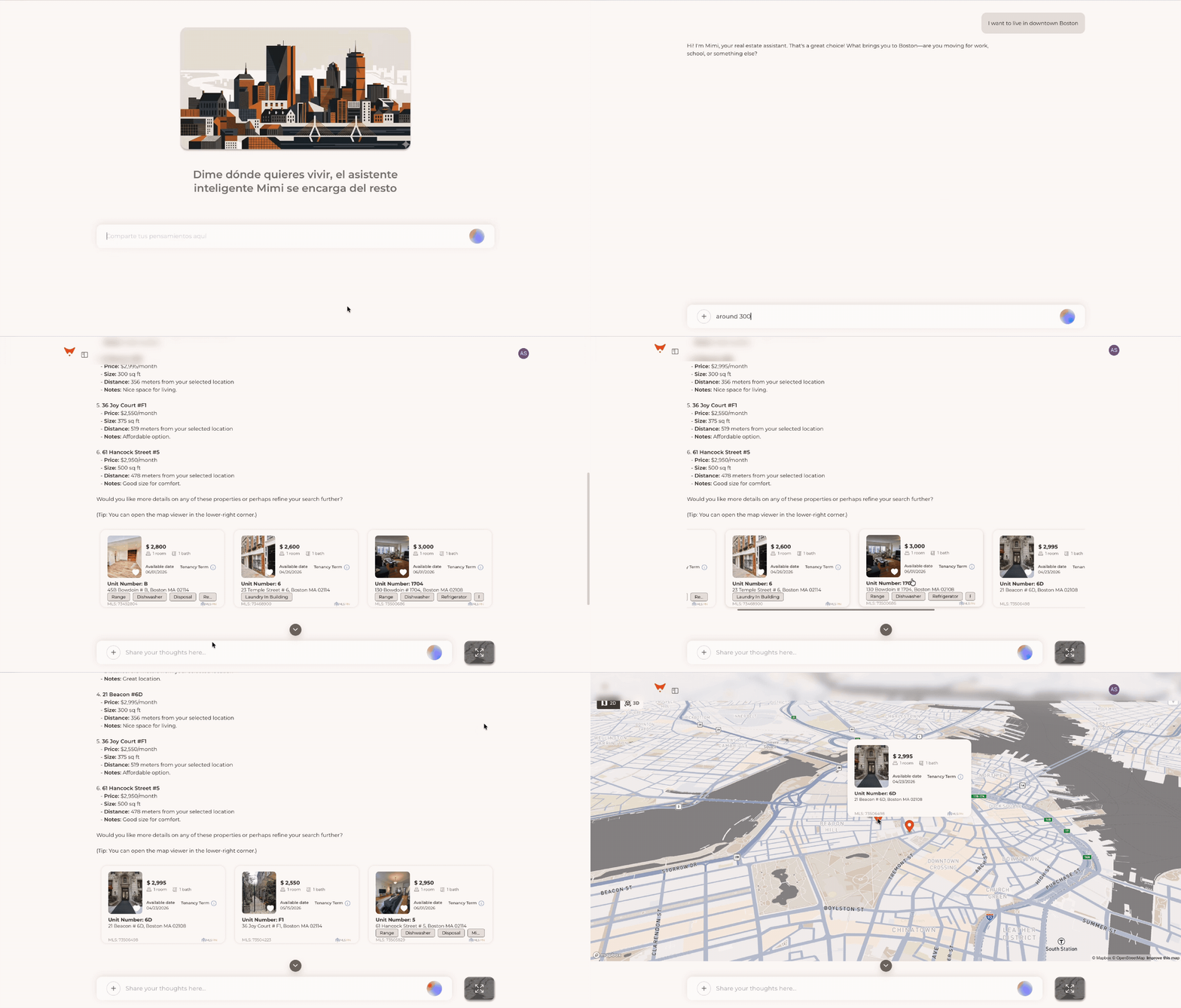
AI-assisted renter discovery
-
Streamlined renter decision flow
-
Lightweight agent dashboard for lead coordination
Research & Product Framing
Before defining the MVP scope, we conducted early research to understand renter behavior in competitive markets.
01
Listing-heavy interfaces overwhelm renters
The MVP introduced a cleaner, AI-assisted discovery flow that surfaces relevant listings earlier in the journey.
02
Rental decisions are fragmented across multiple tools
03
SysteMarketplace coordination requires structured workflows
The product consolidates discovery, evaluation, and scheduling into a guided one-stop decision flow.
The MVP introduced a lightweight agent dashboard to streamline lead coordination and listing management.
Validating the Dual-Sided Marketplace
Designed core renter and agent journeys to ensure marketplace viability, while keeping interaction lightweight for early-stage release.
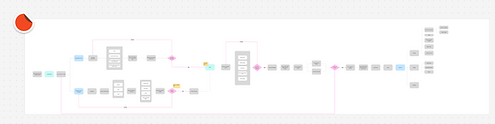
B2C user-flow

B2B user-flow

Goal
Transforming rental search from open-ended browsing into a guided, goal-oriented flow.
Designing the Renter Experience (B2C)
The renter experience was designed around one core objective, to reduce friction and compress the decision-making journey into a guided, intelligent flow.
Instead of functioning as a traditional listing directory, Allroomie 1.0 aimed to provide a more direct, AI-supported path from intent to action.
01 AI-Assisted Discovery
The renter discovery experience focused on reducing decision friction by guiding users toward relevant listings earlier in the journey.
The goal was not to maximize browsing, but to shorten the path to clarity.
-
Reduced dependency on complex filtering
-
Prioritized relevance over quantity
-
Designed for speed and focus

02 One-Stop Decision Flow
Traditional rental platforms require users to move across multiple steps: search, compare, external messaging, and separate scheduling.
In contrast, the 1.0 experience consolidated key actions into a more unified flow:
-
View listing
-
Understand key decision factors
-
Take action immediately
The interface emphasized hierarchy, breathing space, and structured information layers to minimize cognitive overload.
03 Direct Agent Coordination via Integrated Calendar
Instead of requiring external communication with brokers, scheduling was integrated directly within the platform.
The calendar feature enabled renters to:
-
Instantly check availability
-
Propose times
-
Connect with agents directly
04 Clear Information Hierarchy for Faster Decisions
The interface emphasized clear hierarchy, structured content blocks, and reduced visual noise to help renters quickly evaluate key listing information.
The design emphasized:
-
Generous whitespace
-
Clear typographic hierarchy
-
Structured content blocks
-
Reduced visual noise

Designing the Agent Workspace (B2B)
01 Lead & Listing Management
To support marketplace coordination, the MVP introduced a lightweight but structured agent workspace. Agents often manage renter inquiries, listings, and scheduling across multiple tools, making lead coordination inefficient and difficult to track.
Agents could manage listings, edits, drafts, and renter inquiries within a unified interface.
02 Structured Workflow for Agents
The interface prioritized operational efficiency, organizing information around action states rather than purely visual grouping

03 Marketplace Coordination & Lead Visibility
Because the platform connects renters and agents, the dashboard supports both lead visibility and communication efficiency. This structure helped agents track renter activity more clearly and respond faster to incoming leads.
Building the Design System Foundation
As the product expanded across both renter and agent workflows, maintaining UI consistency and scalable patterns became critical.
To support rapid iteration and engineering handoff, I established a foundational design system for the MVP.
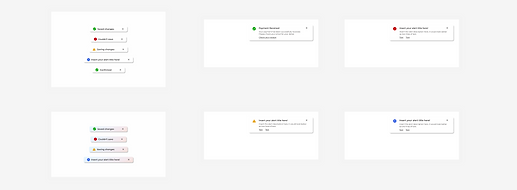


Without a foundational system, the renter web app and agent dashboard were drifting visually within the first couple weeks of MVP development. Different components, different spacing, inconsistent feedback patterns.
I scoped a minimal v1 system around three priorities:
-
Unblock engineering. Naming, structure, and tokens needed to map cleanly to the front-end component library.
-
Cover both sides of the marketplace. The renter B2C product and the agent B2B dashboard share a foundation but diverge in density and feedback. The system needed to support both without forking.
-
Stay small enough to ship. v1 covered the 80% — typography scale, spacing grid, semantic color tokens, core components (cards, forms, modals, status pills), and system-level feedback patterns. Anything beyond that waited for v1.5.
Front-end implementation moved roughly 2x faster across the final weeks of MVP development. We launched without a single major UI inconsistency between the two systems.
Outcomes
Impact
-
Reduced manual broker coordination by ~40% by centralizing renter inquiries, listing management, and scheduling within a unified agent workspace.
-
Improved renter-broker response speed by ~35% by increasing lead visibility and simplifying communication workflows.
-
Helped launch the AllRoomie MVP, establishing the core product structure connecting renter discovery and agent coordination.
Product Learnings & Next Iterations
Search alone doesn't solve decision-making
Early testing showed that renters could browse listings easily but still struggled to move toward a confident decision.
Future iterations focus on improving guided discovery and clearer comparison between properties.
Agent workflows require clearer prioritization
Agents often handle multiple renter inquiries simultaneously.
We introduced structured lead states and activity tracking to help agents prioritize responses and manage conversations more efficiently.
Marketplace coordination is critical for platform growth
Because AllRoomie connects renters and agents, both sides depend on timely communication.
Future improvements focus on faster lead routing and clearer interaction signals between renters and agents.
Looking Ahead
We are currently iterating toward Allroomie 2.0 — building on the MVP foundation to address the friction points identified in 1.0 and strengthen intelligence across the marketplace.
